2026-10-25
Buffalo Hump Removal (Buffalo Contouring) Results
A Seoul dermatology clinic shares before-and-after photos of buffalo hump removal, covering the procedure, scarring, the 1-year recovery timeline, and fluid volume.
#MushroomNeck #BuffaloHump #NeckCallus #DowagerHump #BuffaloContouring
Hello, this is Dr. Cho Young-min.
Between the end of last year and the start of this one, I was so busy performing lifting treatments that I could barely catch my breath.
Surprisingly, many of the patients who came in for lifting were also concerned about having a buffalo hump.
Most of them didn't even know it could be removed...
Some said it had been a lifelong wish of theirs. T_T
There were also patients who came in for Ulthera facial treatment and, since they live out of town, decided to get buffalo contouring while they were here.
Because the results of their facial ultrasound contouring were so good, some patients went on to get buffalo contouring as well :)
For anyone unfamiliar with buffalo hump, I've included a link to my previous post below!
For those who are eager to have it removed, I'd like to share some before-and-after photos.
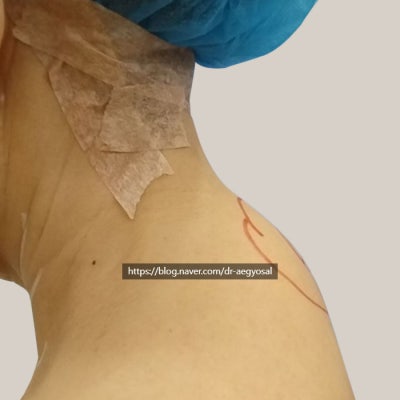
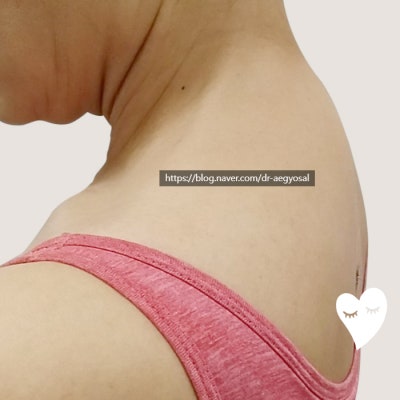
The angles are slightly different, but you can see at a glance that the lump is gone.
As shown in the photo on the left, the design varies depending on the size and thickness of the buffalo hump before treatment, and as shown in the right photo, the procedure is performed through an incision of about 1 cm in the area marked with a heart.
Scarring is rare, but even if a mark occasionally remains, it's in an area covered by clothing, so it's rarely a major concern.
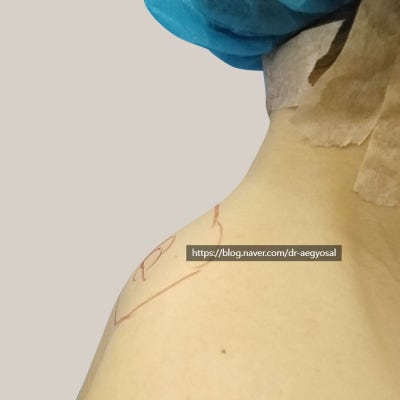
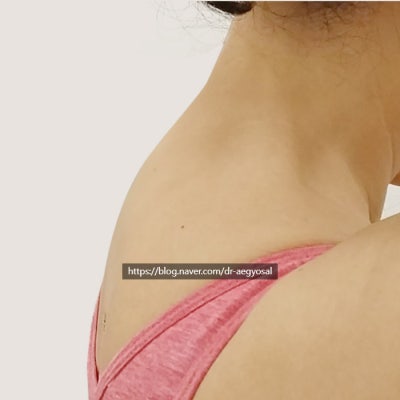
Viewed from the other side, you can also see the smooth contour of the back.
In fact, that photo was taken two weeks after treatment, and the results continue to improve over the following year.
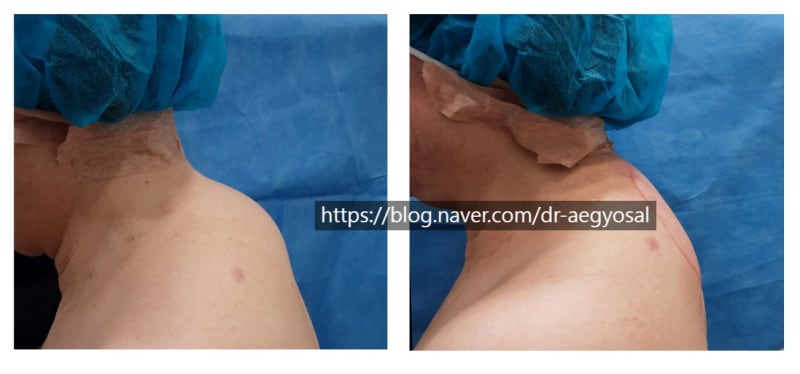
This photo was taken on the same day, right after the procedure. (Left: before, right: after)
Because the procedure involves filling the area with fluid and breaking down tissue with ultrasound, a considerable amount of fluid (roughly 300–500 ml) goes into the buffalo hump.
Some of the fluid drains out during the procedure, and the fluid that remains in the tissue is fully drained within 18–24 hours.
So you can think of it as a large amount of fatty and fibrous tissue having been removed.
You can see that the bulging hump has vanished as if it had been sliced away, right? ^^
As I mentioned above, the results aren't 100% yet, since the area still contains fluid and is still swollen.
Please also keep in mind that results continue to improve for up to one year after treatment,
so please take that into account!
Here's a quick look at a video showing the liquefied fatty and fibrous tissue coming out during the procedure.
Frequently Asked Questions
Can a buffalo hump be removed?
Yes. This post shares a case in which the lump was removed through buffalo hump removal (buffalo contouring). The before-and-after photos show that the lump is gone.
How is buffalo contouring performed?
According to the post, the procedure involves filling the area with fluid and then breaking down the tissue using ultrasound. An incision of about 1 cm is made, and the design varies depending on the size and thickness of the buffalo hump.
Does the procedure leave a scar?
The post explains that scarring is uncommon. Even if a mark occasionally remains, it's in an area covered by clothing, so it's rarely a major concern.
When do the results appear?
The post explains that results gradually improve for up to one year after treatment. A photo taken two weeks after the procedure is shared, and it notes that right after treatment the area is still filled with fluid, so the results aren't yet 100%.
How much fluid is injected during the procedure?
The post says roughly 300–500 ml of fluid is introduced. Some of it drains out during the procedure, and the fluid remaining in the tissue is fully drained within 18–24 hours.
Can it be done together with Ulthera?
Yes. The post mentions a case where a patient came in for Ulthera and also received buffalo contouring. However, the post does not address whether it is suitable for every individual.